 China bestes Büromöbelschloss, Schlosshersteller ODM/OEM – Schlossfirma herstellen

Zusammenfassung
A detailed four-step process for selecting Schließfach-Schlosss; MAKE Security offers solutions tailored to diverse scenarios and operating conditions.
How do you procure the right Schließfach-Schloss? This article provides a professional selection guide, outlining the complete decision-making logic across four key dimensions: comparing the pros and cons of mainstream lock types, evaluating core parameters, matching locks to specific use cases, and offering procurement advice.
Step 1
Gain a comprehensive understanding of the pros and cons of the five mainstream Schließfach-Schloss types—mechanical, RFID, Tastatur, electromagnetic, and passive locks—and then determine the most suitable type based on your project’s specific scenario and positioning.
Pros and Cons of Locker Locks
Mechanical Locks
Pros:
① Low procurement cost.
② Robust mechanical structure; highly stable and unaffected by electrical issues.
③ No power supply required; highly adaptable to various environments.
Cons: Complex key management; inconvenient replacement if keys are lost.
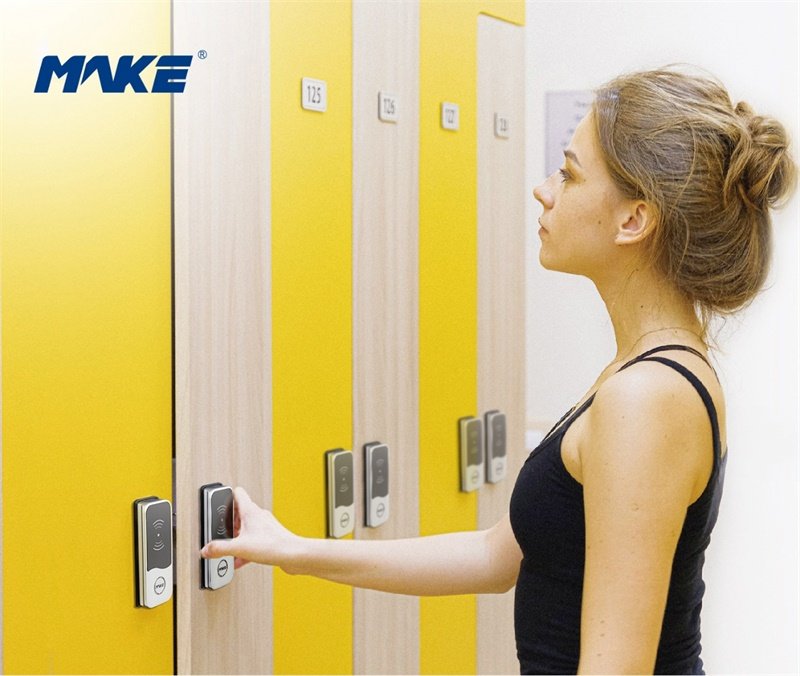
RFID-Schlösser
Pros:
① Contactless operation via card or wristband; fast unlocking speed.
② Cards/wristbands are reusable; access rights can simply be revoked when personnel change, eliminating the need to replace locks and lowering long-term maintenance costs.
Cons: Cards are easily duplicated; batteries require periodic replacement.
Tastatursperren
Pros:
① Supports multiple password types, including codes for long-term users, temporary users, administrators, and managers.
② No need to carry physical keys, Karten, or wristbands; eliminates management costs associated with these items.
③ No wear and tear on physical access tokens; easily accommodates high personnel turnover by simply changing the code.
Cons: Risk of forgotten or compromised codes; keypads are prone to wear.
Electromagnetic Locks
Pros:
① Supports multiple unlocking methods, such as facial recognition and passcodes.
② Rapid response time; meets the need for quick access in high-frequency usage scenarios.
③ Concealed design; highly resistant to forced entry or vandalism.
Cons: High reliance on power supply; higher energy consumption costs.
Passive Locks
Pros:
① Utilizes passive lock control technology; offers a high level of security.
② Wireless installation; the key provides power to the lock mechanism.
③ Equipped with a software platform that supports authorized key access, allows a single key to open multiple locks, and enables the tracking of unlocking records.
Drawback: Slightly less convenient for locking and unlocking.
Step 2
Thoroughly understand the key parameters for selecting Schließfach-Schlosss and establish a professional evaluation framework to avoid falling for marketing gimmicks or hidden pitfalls regarding specifications.
Key parameters for selecting locker locks
| Locker locker | mechanisches Schloss | RFID-Schloss | Kombinationsschloss | Electromagnetic lock | Passive lock |
| Security capabilities | Lock cylinder grade, material, security devices, key teeth | Encrypted communication methods and hierarchical management | Password combination, hierarchical management, and test prohibition function | Electromagnet performance and service life | Passive locking technology |
| Service life | Trouble-free opening and closing times of the lock cylinder mechanical structure | IC/IC card solutions, battery life | Chip configuration, battery life, button lifespan | Lock power consumption and structural stability | Lock power consumption and battery life |
| Protection level | Surface treatment | IP protection level | IP protection level | Surface treatment | Surface treatment |
Step 3
Leveraging the established selection framework and considering three core dimensions—usage scenarios, target users, and operational conditions—rapidly identify and lock in high-quality locks that meet scenario requirements and offer long-term durability. This approach significantly shortens the selection cycle and reduces the costs associated with trial and error.
Practical Guide to Selection Decision-Making
| Use cases | Operating conditions | Recommended lock types | Locking Coping Capabilities |
| Amusement park self-service lockers | High-frequency use, complex personnel, and short-term storage requirements | Combination lock /RFID lock | Quick door opening; emergency start in case of power failure or battery depletion; hierarchical management and simple operation and maintenance. |
| Factory employee lockers | High-frequency use, oily / dusty environment, fixed personnel | RFID-Schlösser / mechanical locks | Stable and reliable operation; high protection level, dustproof and oil-resistant; reduces operation and maintenance costs. |
| Campus student lockers | High frequency of use, fixed personnel, and the risk of horseplay and violence. | Zahlenschloss / mechanisches Schloss | High security level; resistant to violent destruction; long service life. |
| Outdoor public lockers / courier lockers | All-weather outdoor environment, high and low temperatures / rain / sun exposure, high frequency of use | Electromagnetic lock | temperature / humidity range; resistant to salt spray corrosion; low power consumption. |
| Museum display cases | Medium-frequency use, fixed personnel, and the risk of cultural relic theft. | Passive lock | Keine Verkabelung erforderlich; access controllable; lock unlocking records can be queried. |
Schließlich, purchasing advice for 2026
When requesting a quote, do not simply ask for “Schließfach-Schlosss.” Be sure to clarify the following details:
- Mounting hole dimensions and compatibility
- Applicable locker door thickness range
- Suitability for humid environments
- Smart management features
- Customization options
- Upgrade and replacement plans
Clarifying these points will significantly improve the accuracy of quote comparisons and help you avoid hidden costs down the line.
Häufig gestellte Fragen
- Which domestic Schließfach-Schlossmanufacturer has a strong reputation?
MAKE Security is a global provider of professional Schließfach-Schloss Lösungen. With years of deep expertise in R&D and manufacturing, we offer customized Schließfach-Schloss solutions for a wide range of scenarios and operating conditions to clients worldwide. Our products hold authoritative international quality certifications and deliver stable, reliable performance. We can tailor specific capabilities—such as dust resistance, waterproofing, Schwierigkeit der Verformung, and low-power/long-battery-life operation—to meet the unique requirements of different regions and use cases. We have successfully supplied high-quality locks and services to major enterprises both domestically and internationally.
- What else should be considered when choosing Schließfach-Schlosss?
Beyond the locks themselves, it is crucial to evaluate the supplier’s R&D innovation capabilities, precision manufacturing strength, and global delivery services.
Once you have selected the lock type and specifications, you should assess the supplier’s comprehensive capabilities across three dimensions: R&D innovation, precision manufacturing, and global delivery. These factors directly determine the efficiency of project implementation, long-term operating costs, and the quality of after-sales support.
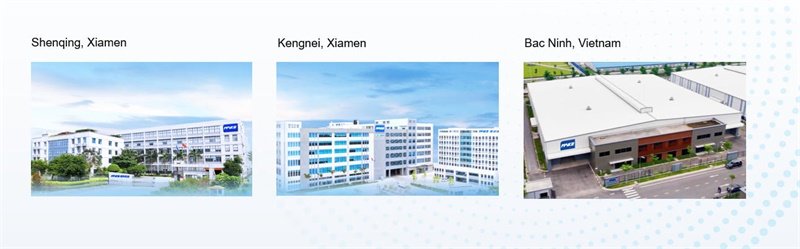
MAKE Security R&D and Manufacturing Base
Conclusion
We hope this information proves helpful. If you have specific customization needs for your application scenario, require locks tailored for unique operating conditions, or wish to receive a customized project quote, kontaktieren Sie uns bitte jederzeit. We are ready to provide professional, one-on-one support to help you select the right solution.